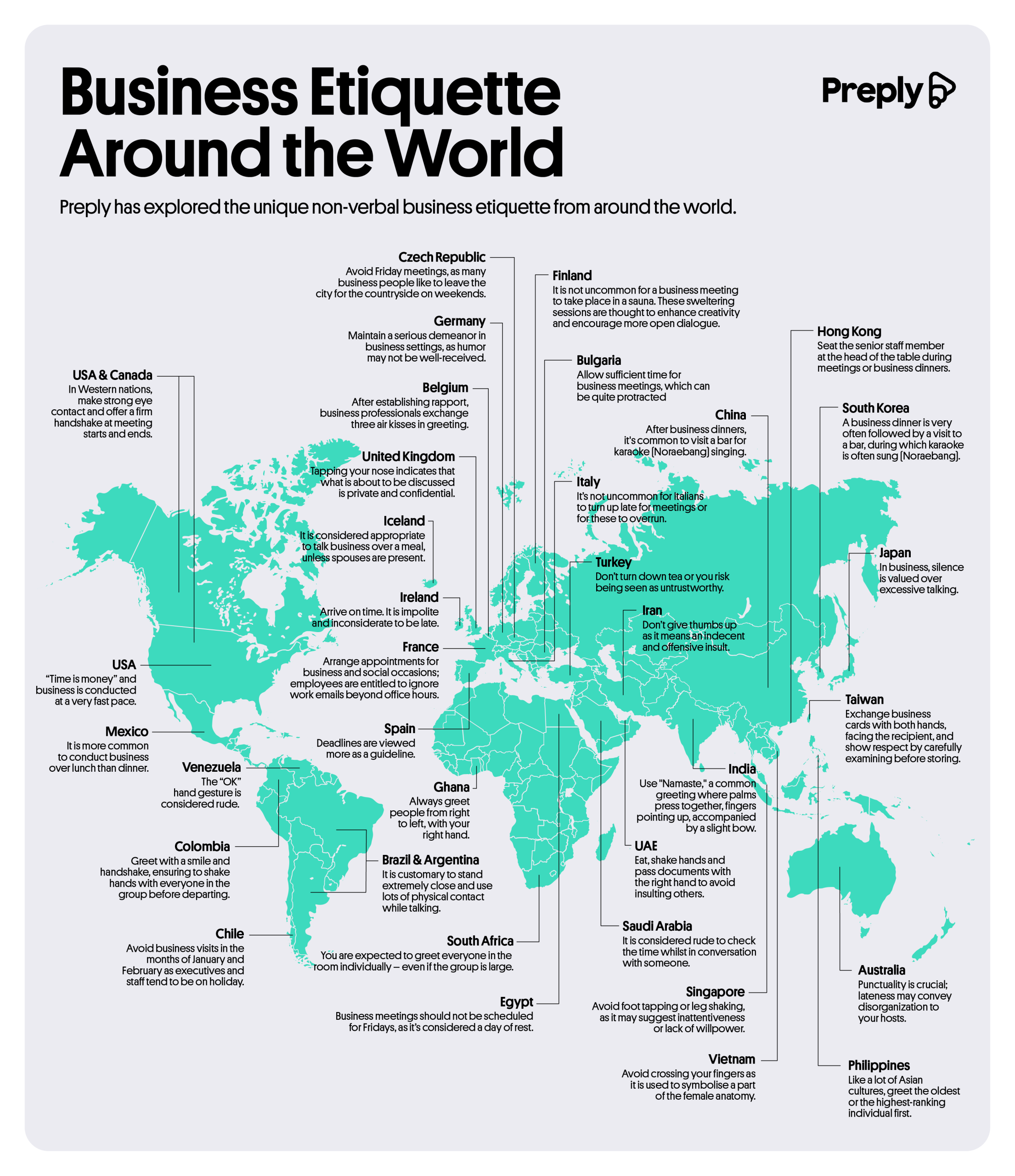
Have you ever found yourself in a foreign country unsure of the cultural norms and etiquette? Navigating the do’s and don’ts of different cultures can be a challenging yet essential aspect of traveling. Understanding and respecting cultural etiquette around the world can greatly enhance your travel experience and help you avoid unintentional faux pas.
The Do’s:
1. When visiting Japan, always bow as a form of greeting. The depth of the bow signifies the level of respect you are showing.
2. In Italy, it is customary to greet people with a kiss on each cheek. Embrace this tradition to show warmth and friendliness.
3. When dining in China, it is polite to leave a small amount of food on your plate to indicate that you are full. This shows appreciation for the meal.
The Don’ts:
1. Avoid showing the soles of your feet in Thailand as it is considered disrespectful. Keep your feet flat on the ground to show proper manners.
2. In India, do not use your left hand for eating or passing objects as it is considered unclean. The right hand is traditionally used for these actions.
3. Refrain from pointing with your finger in many Middle Eastern countries as it can be seen as rude. Instead, gesture with an open hand or nod in the direction you are referring to.
My Cultural Etiquette Mishap:
During my trip to France, I made the mistake of not saying “bonjour” before starting a conversation with a local shopkeeper. This simple greeting is a sign of respect in French culture, and my oversight was met with a cold response. I quickly learned the importance of observing local customs to avoid awkward encounters.
Conclusion:
Understanding and following cultural etiquette around the world is crucial for building positive relationships with people from different backgrounds. By being mindful of the do’s and don’ts of various cultures, you can show respect, appreciation, and openness wherever your travels take you. Embrace the differences, learn from your mistakes, and immerse yourself in the rich tapestry of global customs and traditions.